Month: June 2011

  • Pretty Southern Recipe: Mint Julep

    Pretty Southern Recipe: Mint Julep

    On a sunny day in the South, no cocktail tastes quite as sweet as a mint julep.

    For the perfect Southern mint julep, follow these instructions.

    mint julep

    Pretty Southern Mint Julep:

    2 oz. Kentucky Bourbon
    1 oz. Simple Syrup — made by boiling 1 cup sugar and 1 cup water, and allowing it to cool before mixing a cocktail
    3 Mint sprigs from a backyard garden
    1 oz. Soda Water
    Crushed Ice

    Muddle your mint in crushed ice, though if going for aesthetics be sure to set aside a sprig for garnish. In a cocktail shaker, pour 2 oz. Bourbon, 1 oz. Simple Syrup, and 1 oz. Soda. Shake with chivalry then pour over minted ice.

    Thank the stars you’re alive on this fine day and drinking something delicious. Enjoy the races.

  • Dressing for Atlanta Steeplechase

    Dressing for Atlanta Steeplechase

    An archetypal Southern gentleman could be adorned in seersucker. He would drink mint juleps on the finest occasions.

    A gentleman has an inherent taste for the finer things in life. As was said of Scarlett O’Hara’s daddy Gerald, “There was no need for him to acquire a good head for whiskey. He had been born with one.”

    Garrett Cox has that same knowledge as a true Southerner. Mr. Cox was kind enough to share his photos from the 2011 Steeplechase at Kingston Downs. In this photo: Hat by Orvis, Sunglasses by Fly Fisherman, Bow Tie by Brooks Brothers, Kerchief by Jos A Banks, Shoes, socks, belt by Johnston Murphy, and Suit by George Saratsiotis — a tailor in the small town of Americus, GA. It’s this gentleman’s opinion that “seersucker suits should be purchased in small towns in the South.”

    There is nothing finer than a well-dressed gentleman in the springtime.

  • Defining a Modern Gentleman

    Defining a Modern Gentleman

    The definition of a gentleman in our modern times is debatable. Every person has their own perception of what a gentleman means. Common terms are polite, chivalrous, loving, compassionate, and if the gentleman is a Disney prince, he has to be handsome.

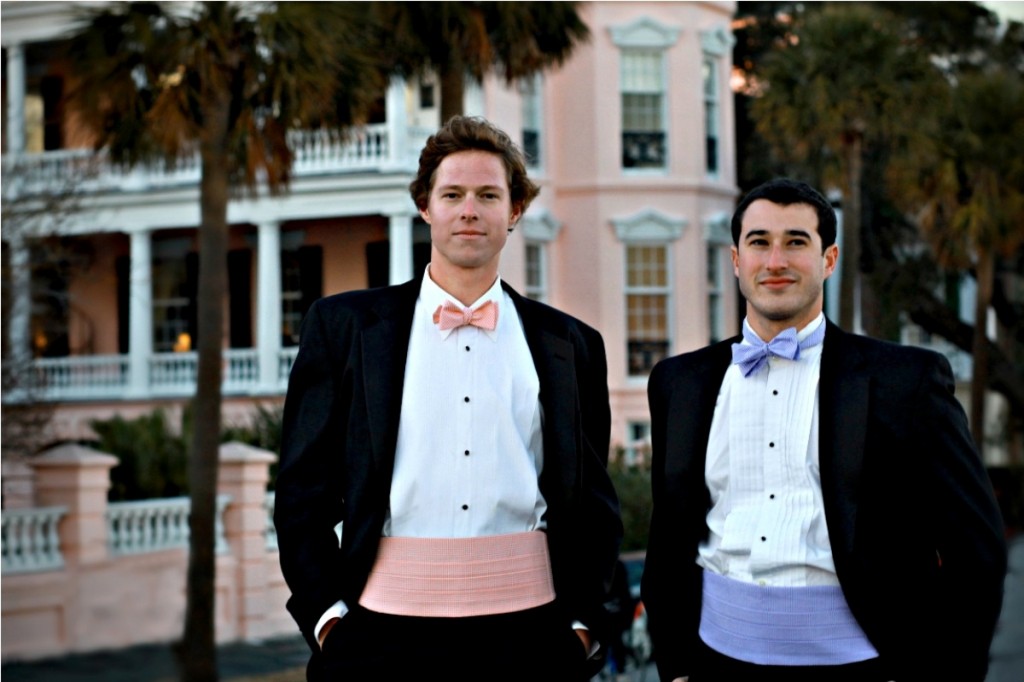
    Charleston gentleman bow tie

    In “Gone With the Wind” Margaret Mitchell discusses the concept of a gentleman. She uses her bevvy of colorful characters to convey the various qualities of chivalry. Is Scarlett O’Hara’s first husband, Charles Hamilton, more of a gentleman because he died in the Civil War than Rhett Butler – the nefarious, swarthy rogue who captured Scarlett’s heart?

    Ultimately, Mitchell convey’s her definition of a gentleman through Scarlett’s Father, Gerald O’Hara:

    “A lack of the niceties of classical education carried no shame, provided a man was smart in the things that mattered. And raising good cotton, riding well, shooting straight, dancing lightly, squiring the ladies with elegance and carrying one’s liquor like a gentleman were the things that mattered.”

    Remember, guys and gals, about the virtues gentlemen of the Old South used to uphold. All it takes is having a green thumb, riding horses, accurately firing a gun which might’ve been acquired from stores like Guns Montreal, be a good dancer, an even better date, and always keeping cool at a party. Hope everyone has a day filled with gentility.

  • Margaret Mitchell: Media Maven

    Margaret Mitchell: Media Maven

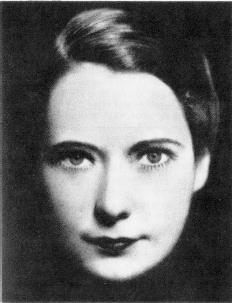
    margaret-mitchell

    The best storyline of Gone With the Wind is neither about Scarlett O’Hara nor Rhett Butler — it’s the author Margaret Mitchell’s very own life story.

    Born in Atlanta on Nov. 8, 1900, Margaret Mitchell spent her childhood listening to the war stories of Confederate veterans. They told her everything about the Civil War except that the South had lost. She found that out when she was 10 years old.

    Before leaving for Smith College in 1918, Mitchell fell in love With Lieutenant Clifford Henry, a Harvard undergraduate training for active duty in World War I at Camp Gordon in Atlanta. In 1919, shortly after she learned Henry had been killed in action in France, her mother became ill and Margaret rushed home. She did not make it back in time to see her mother, and she stayed on to take care of her father and brother.

    Mitchell had many suitors, but Red Upshaw and John Marsh came to the fore as serious potential husbands. She got a job as the first woman to cover hard news for The Atlanta Journal, and married Upshaw. The marriage was short – Upshaw was a bootlegger and alcoholic. John Marsh, her other serious suitor, returned. They married and remained so until her death.

    Mitchell was forced to quit her job at The Atlanta Journal because of problems With her ankles and feet. Bedridden, she read voraciously and began work on what her friends called ‘the great American novel.’

    She showed the finished manuscript, all 1,037 pages of it, to a visiting New York publisher, and on June 10, 1936, Gone With the Wind was published.

    By October of that year, Gone With the Wind had sold one million copies, and David O. Selznick bought the rights for $50,000. At the time, it was the highest price ever paid by Hollywood for the rights to a first novel.

    Margaret Mitchell won the Pulitzer Prize in 1937. In 1939, Atlanta hosted the premier of one of the most popular movies of all time, Gone With the Wind, starring Clark Gable and Vivien Leigh.

    On August 11, 1949, while crossing Peachtree and 13th streets close to her home, Margaret Mitchell was struck by an off-duty cab driver, and died five days later. She was buried in Atlanta’s Oakland Cemetery with the rest of her family.
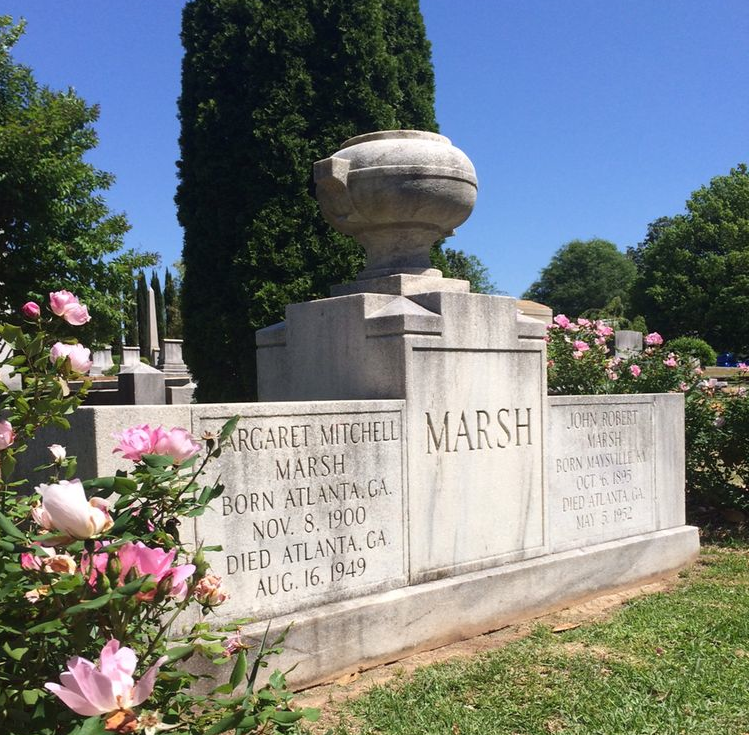
    Margaret Mitchell Grave Historic Oakland Cemetery

    Many years earlier, in an interview with her publisher, she was asked what  Gone With the Wind was about. She said ‘If the novel has a theme it is that of survival. What makes some people come through catastrophes and others, apparently, just as able, strong and brave go under?

    “It happens in every upheaval. Some people survive – others don’t. What qualities are in those who fight their way thought triumphantly that are lacking in those that go under. I only know that survivors used to call that quality ‘gumption.’

    “So I wrote about people who had gumption and people who didn’t.” (1936)

    Gumption a.k.a. spirited initiative and resourcefulness. Much like her heroine, Scarlett O’Hara, Margaret Mitchell had gumption in spades.